


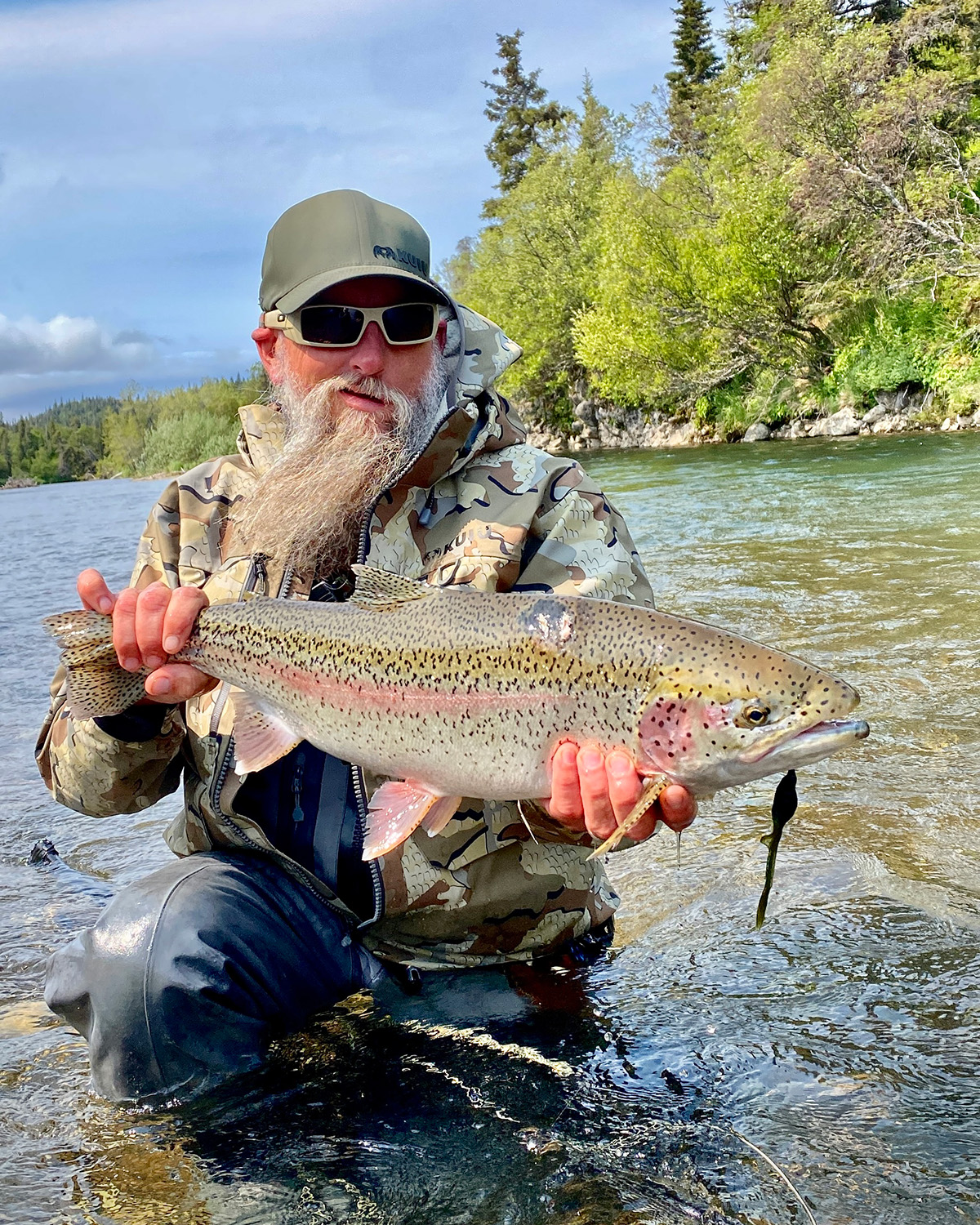
There are many ways to catch a large rainbow trout in Alaska. Anglers drift eggs through deep runs, swing flesh flies behind spawning salmon, and strip large streamers along cutbanks and seams. All of those methods have their place, and each can produce remarkable fish in the right conditions. But among experienced Alaska anglers, one technique seems to stand apart—not necessarily because it produces more fish, but because of the moments it creates. That technique is mousing.
When a large rainbow trout eats a mouse pattern on the surface, it rarely happens quietly. The strike is usually explosive, often violent, and almost always memorable. The water erupts, your mouse disappears in a flash of spray, and for a brief moment the calm rhythm of the river is replaced by pure chaos. Even anglers who have experienced it many times still describe those strikes as some of the most exciting moments in fly fishing.
During a recent conversation on the Frontiers podcast, guide Abe Blair recalled a group of anglers who arrived at the lodge with a very specific goal in mind.
“I remember a group of boys we had last year. That’s all they wanted to do was mice,” Blair said. “I think they had like forty eats walking and wading that river.”
They didn’t land nearly that many fish, but that hardly mattered. The number of surface explosions alone made the day unforgettable.
Listen to the full podcast with Abe Blair & Brian Harry:
Why Trout Eat Mice
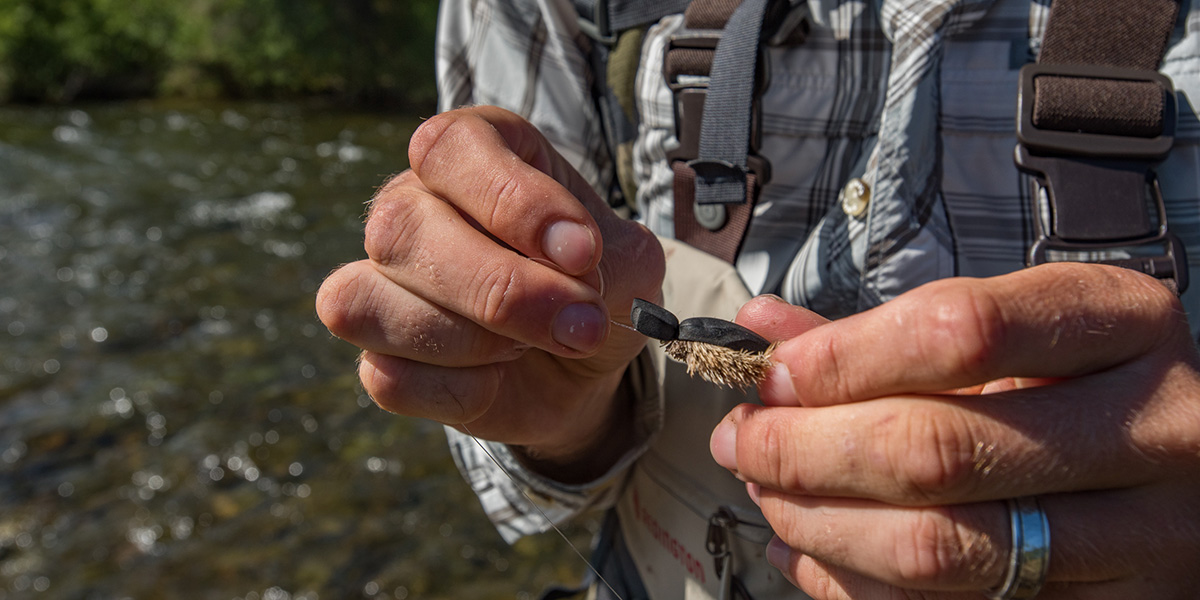
For anglers who associate trout primarily with insects, the idea of a trout attacking a mouse can feel unusual at first. But in Alaska’s river systems, the behavior makes far more sense once you consider the broader ecosystem.
Small mammals regularly cross rivers and side channels in search of food or shelter. Mice fall from grassy banks, slip into the current, or attempt to swim across quiet side channels. For a large trout lurking beneath those banks, that struggling animal represents an easy, calorie-rich meal. Compared to the energy gained from eating dozens of drifting insects, a single mouse provides a substantial reward.
That opportunity helps explain why trout react so aggressively to mouse patterns. Instead of quietly sipping a drifting insect, the fish often moves quickly to intercept what it perceives as vulnerable prey. The result is a strike that feels much closer to a predator attacking its target than a trout feeding delicately on the surface.
The Mystery of the Missed Strike
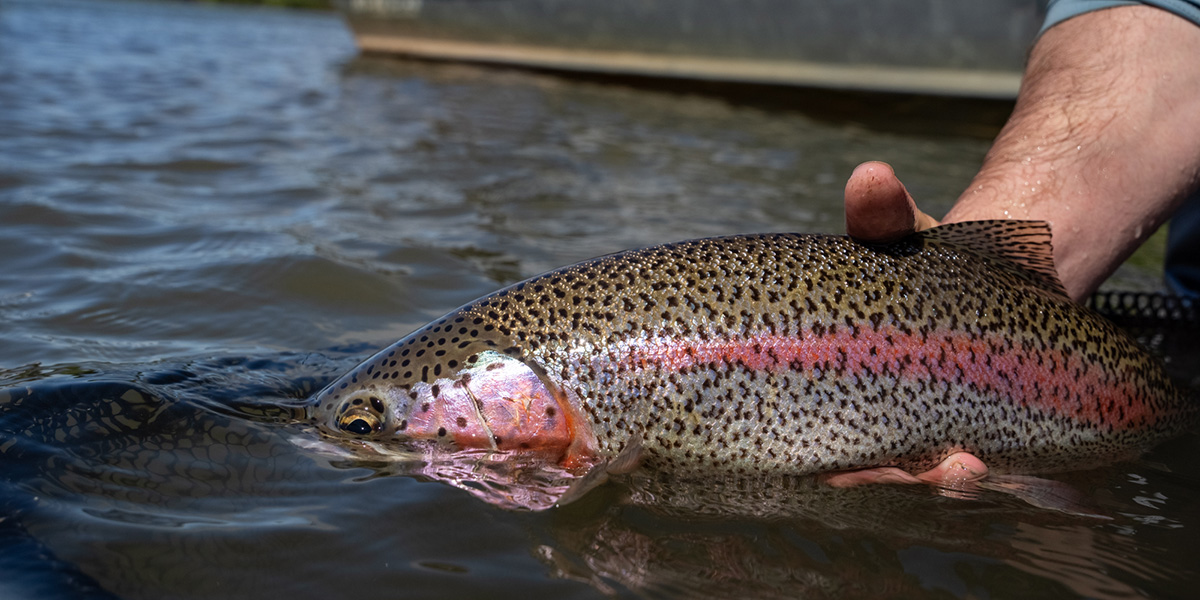
One of the first things anglers notice when mousing for trout is that not every strike leads to a hooked fish. Trout may explode on the fly only to miss it entirely, or it may slap the mouse hard enough to send it flying into the air. At first, those missed opportunities can be frustrating.
Over time, however, guides who spend their seasons watching these fish have developed theories about what is happening beneath the surface.
Blair explained that many trout appear to be attempting to disable their prey before actually eating it.
“Many rainbow trout, when they’re looking to eat a mouse, will try to knock it out first,” Blair said. “They’re trying to stun it before they swallow it.”
This behavior helps explain why experienced anglers are often instructed not to set the hook immediately when they see the splash. Instead, they wait until they feel the weight of the fish before setting the hook. What looks like a missed strike is sometimes simply the trout attempting to incapacitate the prey before returning for the actual meal.
Big Flies in Big Water
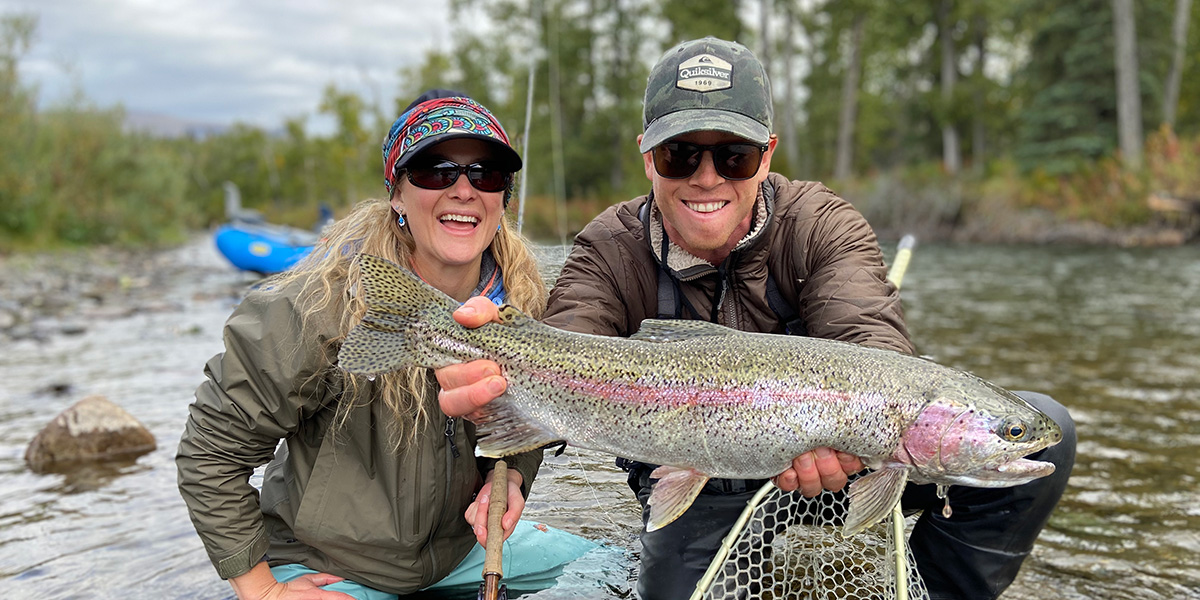
Another reason mousing fits naturally into Alaska trout fishing is the type of water these fish inhabit. The rivers of Bristol Bay are broad, complex systems filled with undercut banks, side channels, woody structure, and deep seams. These features create ideal ambush points where trout can hold out of the main current and wait for food to drift or swim past.
Mouse patterns allow anglers to cover this kind of water efficiently. The mouse is usually presented tightly to the bank or along a structure and then worked slowly across the surface as the current carries it downstream. Instead of imitating a drifting insect, the pattern represents something struggling on the surface, and a subtle difference can trigger a very different response from the fish. Give it a little wiggle to sell the struggle.
The simplicity of the technique also appeals to many anglers. Rather than constantly changing flies to match specific insect hatches, the focus shifts to reading water and placing the fly where a predator might be waiting.
The Moment Everyone Remembers

The cast lands close to the bank, and the mouse begins to move slowly across the surface. The current pulls it along while the angler wiggles it gently, imitating the uneven movement of a swimming rodent. For several seconds, nothing happens, and the mouse drifts quietly through the seam.
Then the water erupts.
A trout appears suddenly from beneath the bank and engulfs the fly with enough force to send spray across the river. The entire sequence may last only a few seconds, but the memory tends to stay with anglers long after the fish is released.
Brian Harry described the challenge that follows the strike with a bit of humor during the podcast.
“You get excited, you set the hook, and now your mouse is back in the air,”
Anyone who has fished mice for trout knows exactly what he means.
There are countless effective ways to catch trout in Alaska, and many of them produce remarkable fishing throughout the season. Yet mousing holds a special place for anglers who have experienced it. The visual nature of the strikes, the unpredictability of the encounters, and the sheer aggression of the fish all combine to create moments that feel unique even in a place known for extraordinary fishing.
Even when the hook-up ratio isn’t perfect, the experience itself often becomes the reason anglers keep returning to it. Watching a large rainbow trout charge a mouse in the middle of a quiet Alaskan river is something that leaves a lasting impression, and it offers a glimpse into the predator instincts that make these fish so fascinating.
For more information about Alaska, and to begin planning your trip, contact Tom Gilliland, of Frontiers’ US Office.
Listen to the full podcast with Abe Blair & Brian Harry:
RELATED POSTS
OTHER GREAT TRAVEL IDEAS
Read our Winter 2025 release of Field Notes for a deep dive on other great destinations.