


Hunters of the River: Understanding Alaska’s Predator Rainbow Trout
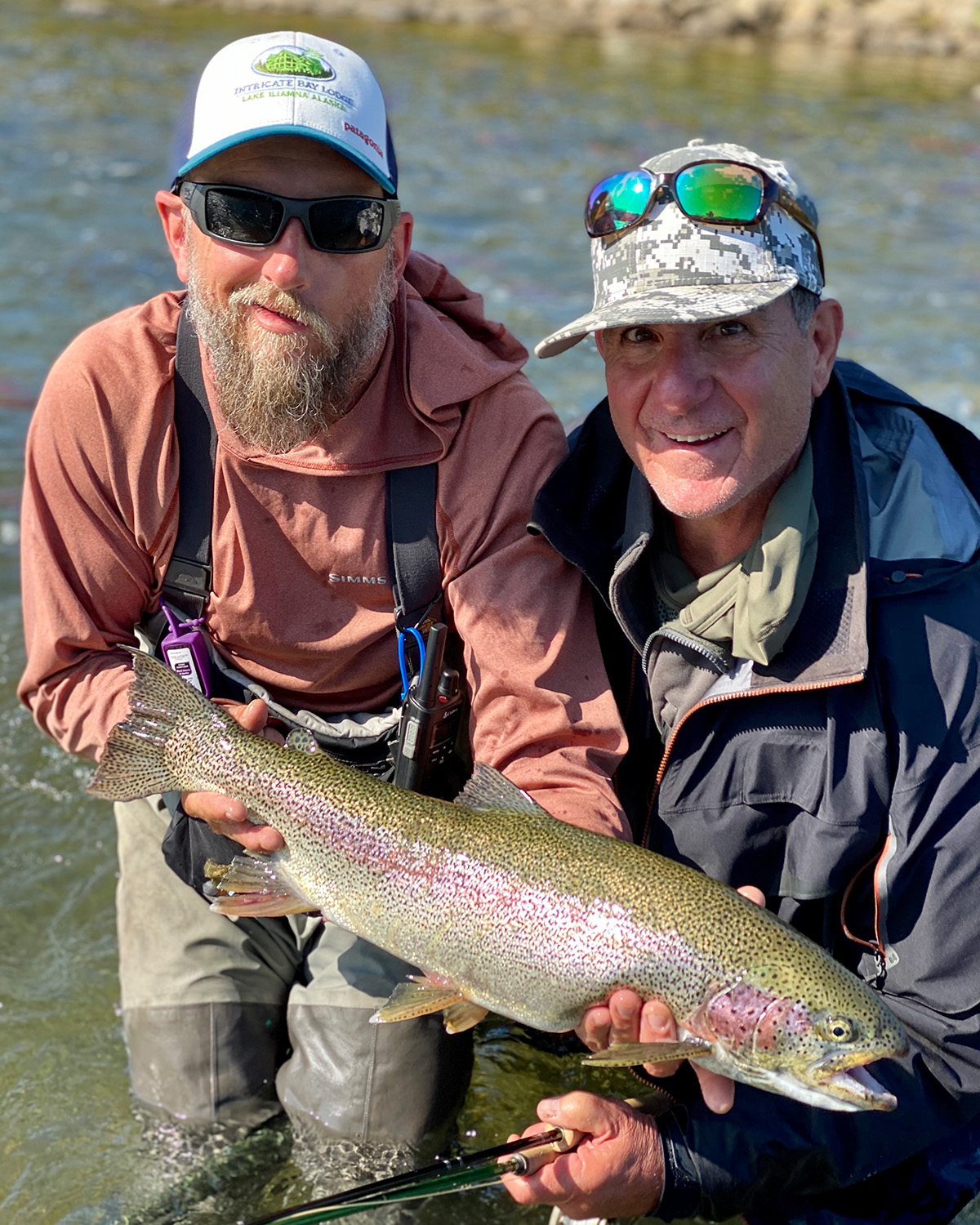
“I watched a rainbow trout practically beach itself, latch onto a rotting sockeye salmon carcass, and shake its head and tear away flesh like a shark.”
– Brian Harry (Owner of Intricate Bay Lodge and Outpost)
Most anglers grow up with a certain understanding of rainbow trout. They rise quietly to mayflies. They sip midges in the film. They can be selective to the point of frustration, forcing anglers to match tiny insects with delicate presentations. Spend time in Alaska, however, and that familiar picture starts to shift. The rainbow trout of Bristol Bay are still trout, but they often behave very differently from what many anglers expect from trout in other locations. Instead of living primarily on drifting insects, these fish operate much more like predators.
During a recent conversation on the Frontiers podcast, guide and lodge manager Abe Blair described the dynamic in simple terms:
“I often tell folks that we hunt the trout and the trout are hunting their meals. It’s not like a lower 48 environment where fish are living happily eating microscopic insects.”
That shift—from seeing trout as passive feeders to understanding them as hunters—is one of the biggest adjustments anglers make when they first experience Alaska.
Listen to the full podcast with Abe Blair & Brian Harry:
A River System Built on Salmon
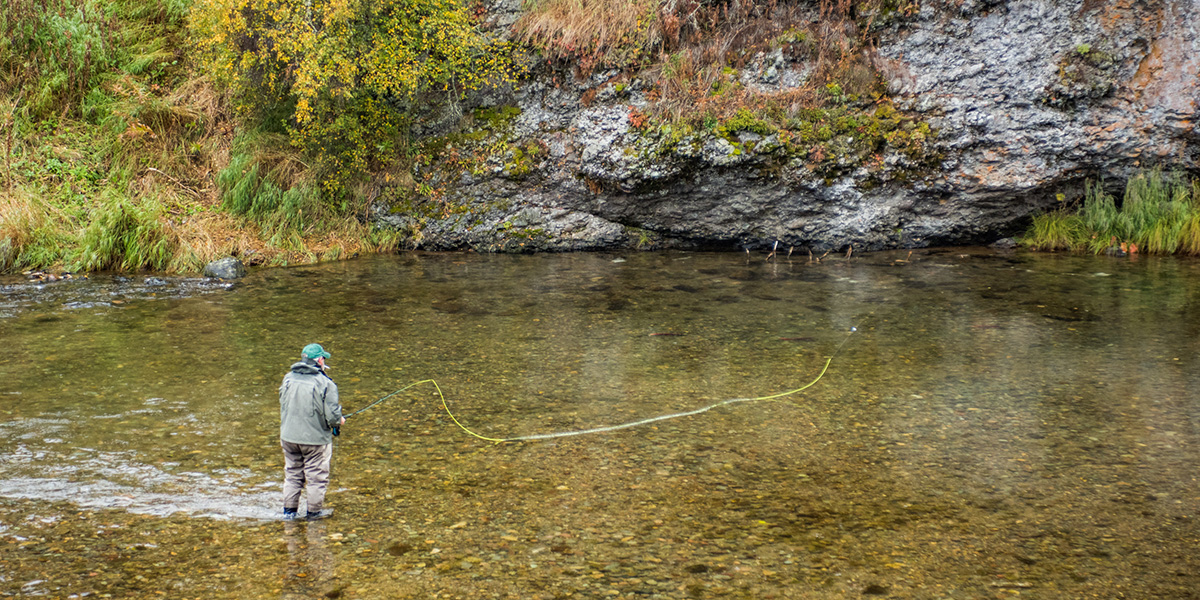
Part of the explanation lies in the scale of the ecosystem.
Each summer, the rivers of Bristol Bay fill with salmon returning from the ocean. The numbers are staggering—tens of millions of fish pushing upstream through watersheds that remain largely untouched.
When those salmon arrive, they bring far more than just another species of fish, they bring food.
Salmon eggs drift downstream by the thousands. Carcasses break apart and tumble through the current. Smaller fish and aquatic insects gather around the remains.
And the rainbow trout follow it all.
Instead of relying primarily on insects, these trout live in a system filled with large, calorie-rich meals. Salmon eggs, flesh, baitfish, and other protein sources become a regular part of their diet.
As Blair explained during the podcast:
“These fish are hunters. They need the protein. They hunt and they eat big.”
That constant supply of food shapes how these trout behave in ways that anglers notice almost immediately.
Instead of focusing on tiny drifting insects, they frequently key in on larger prey moving through the system. A sculpin feeding along the bottom. Eggs tumbling in the current. Pieces of salmon flesh drifting downstream.
The result is a fish that often behaves far more aggressively than the typical image of a rainbow trout might suggest.
A Different Kind of Fish
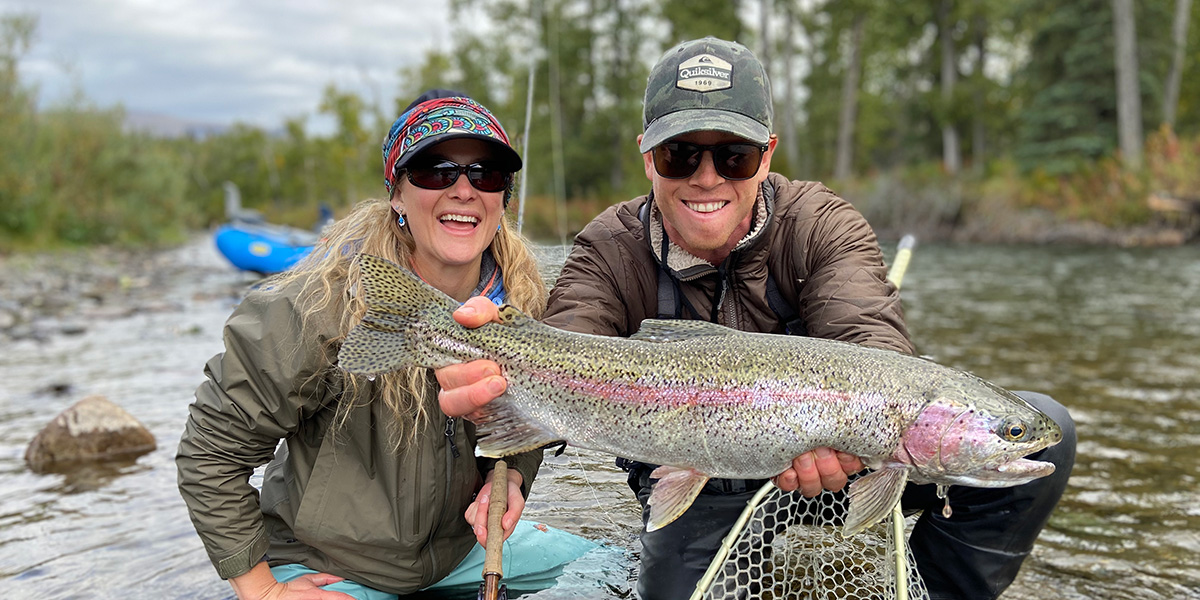
None of this means that traditional trout fishing disappears in Alaska. Dry flies, nymphs, and classic techniques all still have their place throughout the season.
But the broader picture often becomes clear over time.
These trout mature in a river system overflowing with food. They compete with other fish for large meals. They move through the river looking for opportunities rather than simply waiting for insects to drift past.
And that shapes the fish in noticeable ways.
They grow larger.
They fight harder.
And they often behave in ways that remind anglers they are dealing with something more than the typical image of a rainbow trout.
For many anglers, understanding that shift—from delicate insect feeder to opportunistic predator—is one of the most fascinating parts of fishing in Alaska.
For more information about Alaska, and to begin planning your trip, contact Tom Gilliland, of Frontiers’ US Office.
Listen to the full podcast with Abe Blair & Brian Harry:
RELATED POSTS
OTHER GREAT TRAVEL IDEAS
Read our Winter 2025 release of Field Notes for a deep dive on other great destinations.